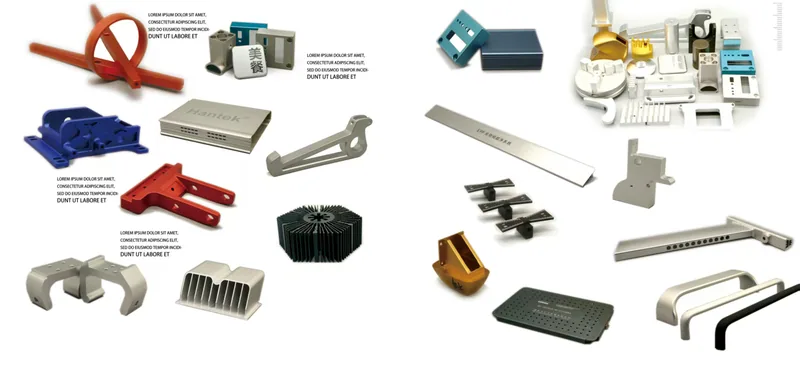
Automotive and industrial aluminum sourcing begins with a defined component, not a general request for "car parts." Buyers should make the application, drawing revision, material and acceptance requirements clear before discussing production quantities.
Treat sample approval and supplier qualification as separate steps. A visually similar part or an approved sample alone does not demonstrate suitability for a safety-critical application.
1. Define the component and its application
Share the part name or number, intended use, dimensioned drawing and revision. State whether the item is an extruded blank, a machined component or an assembly. Include the mating interface and relevant service conditions without sending third-party confidential information you are not authorized to disclose.
If the part is safety-critical, identify that at the enquiry stage and provide the customer's validation and supplier-approval requirements. Do not assume production capability or automotive certification from a catalogue category.
2. Put acceptance requirements on the drawing
- Alloy, temper and the applicable material specification.
- Critical dimensions, datums, geometric requirements and surface roughness where relevant.
- Threads, fits, edge conditions, burr restrictions and required cleanliness.
- Inspection method and required material or dimensional reports.
- Any customer-specific approval, traceability or documentation requirements.
For extrusion-based parts, the AEC tolerance overview is a useful starting reference. The part drawing and agreed inspection plan must still specify the requirements for the actual component, including subsequent machining.
3. Confirm finish, marking and packaging
Identify coated, anodized or uncoated surfaces and any areas to be masked. State whether inspection dimensions are required before or after finishing. Approve appearance references separately from dimensional acceptance.
Agree part identification, lot labels and protective packing. Components with similar geometry but different revisions should remain distinguishable. Specify any customer requirements for material traceability and the records to accompany each shipment.
4. Define the sample-to-production gate
Ask the supplier to identify manufacturing questions before preparing samples. Agree sample quantity, the measurements to be reported and who can authorize changes. Record any deviation rather than relying on an informal message or photo.
Before releasing production, confirm the approved drawing revision, sample disposition, inspection plan and required customer approvals. Additional qualification, testing or production-part approval may be required by the buyer; these are not automatically included or implied by an RFQ.
5. Build a complete quotation request
Separate sample quantity, first order and forecast volume. Request an itemized scope for material, tooling if needed, machining, finishing, inspection and packing. Include the delivery destination and required schedule, with production timing to be confirmed after review.
Send your authorized drawing package to Yanerfei for a manufacturing-feasibility discussion. Any capability statement, certification, price or lead time must be confirmed for the requested part before placing an order.
Discuss your requirements with Yanerfei
Share your product, drawings or dimensions, quantity, country and delivery destination. The quotation will define the agreed specifications, inclusions and terms.
Request a QuoteGeneral purchasing guidance, not engineering or compliance approval. Specifications, availability and commercial terms are confirmed for each project. Product images are illustrative, not a claim of a completed customer project.