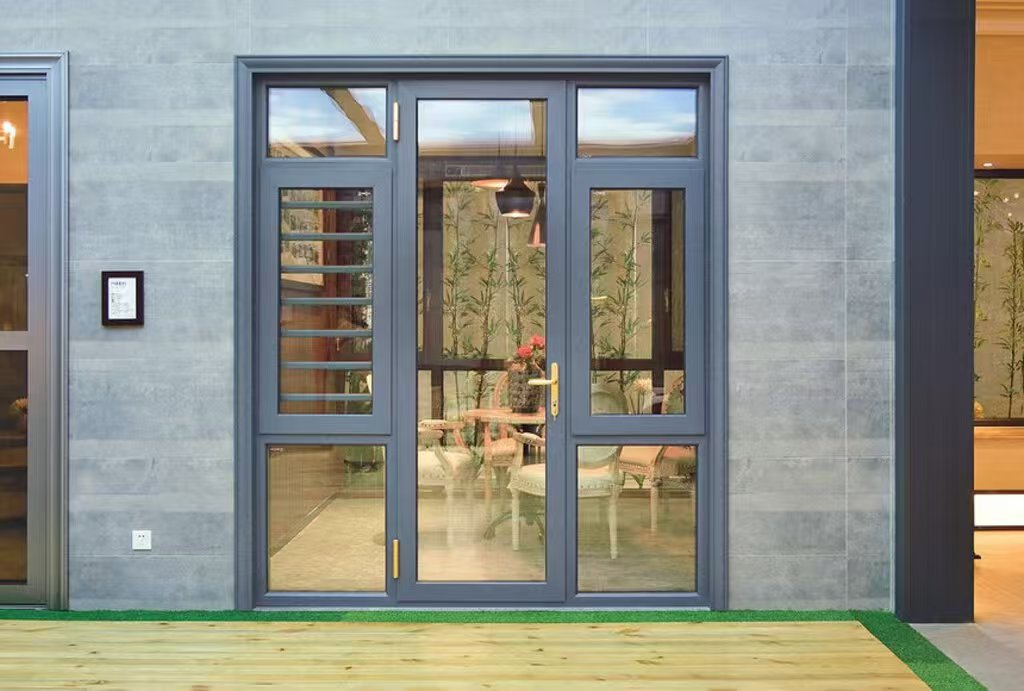
Commercial buildings demand door systems that combine durability, security, accessibility and visual appeal. Commercial aluminum door solutions meet these requirements better than many alternative materials — offering strength, low maintenance, design flexibility and long service life in high-traffic environments.
From office towers and retail stores to hotels, hospitals and educational facilities, aluminum doors have become a standard choice for architects and developers worldwide. This article explores the main types, applications and selection criteria for commercial aluminum doors.
Why Choose Aluminum for Commercial Doors?
Aluminum is lightweight yet strong, resistant to rust and corrosion, and compatible with a wide range of finishes. Unlike steel, it does not require frequent repainting in normal conditions. Unlike wood, it will not warp, rot or swell in humid climates.
For commercial projects, aluminum doors offer:
- High structural strength for large door leaf sizes
- Compatibility with access control and automatic opening systems
- Fire-rated and security-rated configurations (when specified)
- Custom colors and anodized or powder-coated finishes to match branding
- Energy efficiency when combined with thermal break profiles and insulated glass
Types of Commercial Aluminum Doors
Swing Doors (Hinged Doors)
Aluminum swing doors are widely used for main entrances, office suites and internal corridors. Single or double-leaf configurations accommodate different traffic levels. Heavy-duty hinges and closers ensure smooth operation in busy environments.
Sliding Doors
Sliding aluminum doors maximize opening width without sacrificing floor space — ideal for showrooms, conference rooms and retail storefronts. Multi-track systems can create very large openings with minimal visible frame.
Automatic Doors
Aluminum profiles serve as the frame for automatic sliding, swing and revolving door systems. These are essential for hospitals, airports, supermarkets and any building requiring hands-free access and ADA compliance.
Storefront and Entrance Systems
Commercial storefront doors combine narrow aluminum profiles with large glass panels, creating an open and inviting appearance for retail and hospitality projects. These systems must balance aesthetics with wind load resistance and security.
Key Specifications for Commercial Projects
When specifying commercial aluminum doors, consider the following factors:
- Traffic rating — Heavy-duty hardware for high-frequency use
- Security level — Multi-point locking, reinforced frames and impact-resistant glass
- Fire rating — Required in many commercial and public buildings
- Acoustic performance — Important for offices, hotels and conference rooms
- Thermal performance — Thermal break profiles reduce heat transfer and energy costs
- Accessibility — Door width, threshold height and automatic operation for wheelchair access
Applications by Building Type
- Offices — Internal glass partitions with aluminum frames, main entrance swing or automatic doors
- Retail — Wide sliding or swing storefront doors with maximum visibility
- Hotels — Elegant entrance systems with custom finishes and sound insulation
- Healthcare — Automatic doors, easy-clean surfaces and hygienic aluminum finishes
- Education — Durable doors with safety glass and anti-trap hardware
OEM and Custom Commercial Door Solutions
Many commercial projects require non-standard sizes, custom colors or specific hardware brands. Working directly with an aluminum door manufacturer — rather than only a distributor — allows greater flexibility in design and cost control.
Yanerfei provides OEM commercial aluminum door solutions including custom profile design, surface treatment, glass configuration and hardware integration. We support project-based orders for contractors, developers and importers worldwide.
Planning a Commercial Door Project?
Share your drawings and specifications — we'll provide a factory quote and production timeline.
Request a Quote